
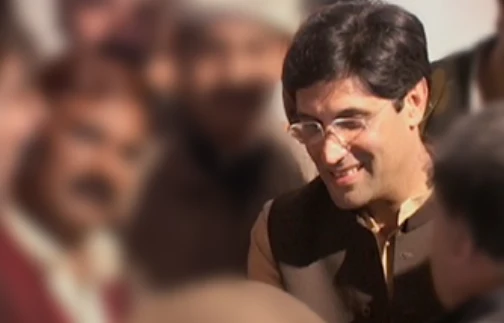
Omar Asghar Khan (1953-2002)
The Foundation is named after Omar Asghar Khan. An extraordinary champion of the rights of the poor, Omar made untiring efforts to organize the vulnerable and advocate a state responsive to its citizens, especially the poor.
Born on 3 July 1953, in his schooling days Omar excelled in swimming, hockey and football. In 1971 he joined the Army and resigned as a Captain in 1973 opposing military actions in East Pakistan and Balochistan. A year later he left for England and obtained an M.Phil in Economics from Cambridge University. He returned to Pakistan in 1979 and started teaching Economics in the Punjab University. Omar’s progressive politics on campus enraged the Islami Jamiat-e-Talaba. In 1983 General Zia-ul-Haq’s regime dismissed Omar from the University on trumped up charges of joining a labour rally. Omar became more active in politics, heading the Istiqlal Youth League of the Tehreek-i-Istiqlal and later serving as the party’s Information Secretary. Omar contested the 1988 and 1990 elections, losing both, as he refused to use money or clan identity for votes. Omar and a team of researchers published a white paper on the 1990 elections How an Election Was Stolen, identifying electoral reforms required for a fair contest.
Omar set up many successful initiatives. In 1982, he helped establish the Pakistan Institute of Labour Education & Research to promote workers’ rights and served on its faculty all his life. In 1987 Omar set up SEBCON (Socio-Economic and Business Consultants) to produce quality action research and policy analysis. In 1989 he founded Sungi Development Foundation, an NGO that pioneered a rights-based approach that influenced development work in Pakistan and the region.
On 6 November 1999 Omar was sworn in as the Federal Minister for Environment, Local Government & Rural Development, Labour, Manpower, and Overseas Pakistanis in General Musharaf‘s cabinet, and became one of the most popular and competent policy-makers. He granted ownership rights to katchi abadi residents through the National Policy on Katchi Abadis. He formed the first-ever Workers & Employers Bilateral Council of Pakistan that developed a labour policy protecting workers’ rights. He was a key architect of the 2001 Local Government which devolved authority, created political space for women, peasants, and workers, and protected provincial autonomy. He lobbied for restoring joint electorate to give equal rights to all citizens. After resigning from General Musharraf’s cabinet Omar launched the Qaumi Jamhoori Party on 28 December 2001 and was elected its President at the party’s convention on 26 May 2002. With a pledge to establish a modern, progressive Pakistan, the party announced its decision to contest the October 2002 elections on 15 June 2002. With exceptional determination Omar organized the young party and campaigned for elections until his sudden, unexplained death in Karachi on 25 June 2002.
Razor-sharp intellect, unwavering conviction, uncompromising integrity and unflinching courage were key elements of Omar’s character. Add to that passionate energy, genuine compassion, and disarming humility, and it was the stuff legends are made of. Omar strived for an equitable, just and tolerant society. His compassion for the dispossessed and the meek, and his commitment to improving their wellbeing is reflected in every aspect of his work and accomplishments. Omar’s vision and achievements are the legacy he has left us with. Its influence has placed its footprint on our work as we continue taking his mission forward.